
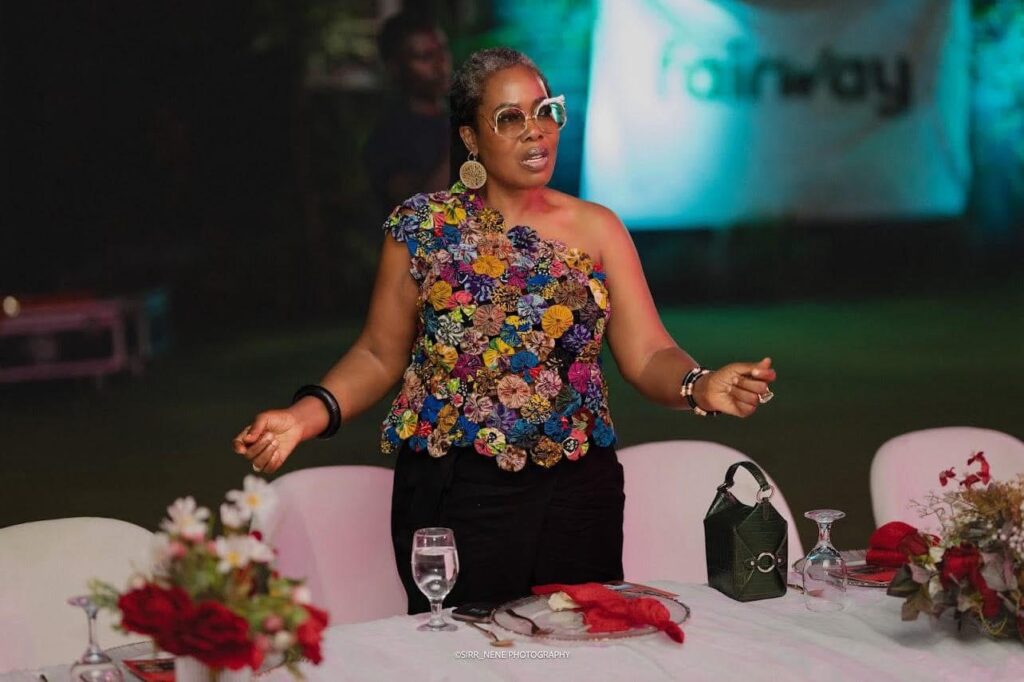
Dr. Afua Asare
Since my childhood, I always dreamed of seeing the world, though I never imagined that working in public service as the head of Ghana’s Export Promotion Authority would be the path to get there. I would see magazines and catalogs with beautiful apparel that I longed to wear. Of course, every girl has a dream like that. Then one day, I woke up as CEO of GEPA, not a fashion designer of international repute, but promoting on the global market, everything made in Ghana including fashion! This is how I found myself becoming an advocate for sustainable fashion. My passion for the fashion world since my younger days kept me curious and eager to learn more about the industry beyond promoting it.
Even from that young age, I understood that fashion wasn’t just about selling clothes; it was an intricate system of creativity, business and hard work. What I quickly discovered was that many of our smaller brands struggled to break into the international market. Despite Ghana being a land full of rich natural resources, vibrant culture and artistic talent, its fashion brands often found it difficult to export and expand their presence globally. The barriers included high production costs, limited access to sustainable materials and the sheer difficulty of gaining recognition in a world dominated by established international fashion houses.
My travel experience with marketing Ghana provided me not only the dynamics of international trade but with a diverse and expansive view of the fashion world. In Asia for instance, I saw firsthand the fast-paced, high-volume nature of the industry, where fashion is produced at an extraordinary scale, often with a focus on quick turnaround and affordability. The mindset that time is money really came into perspective; Brands there, especially in markets like China and India, were prolific, operating at an intense speed that was eye-opening.
However in Europe, the atmosphere shifted significantly. The infrastructure supporting these brands is highly developed, enabling them to maintain a vast global reach. Despite the established nature of these brands, there is also an emphasis on innovation, where the blend of history and modernity creates a uniquely powerful position within the global fashion landscape.
Meanwhile, back in my home country Ghana, the fashion scene tells a different story. Despite its creativity and vibrant energy, brands from Ghana struggle to achieve the same level of global recognition. Designers face logistical hurdles such as export restrictions and high taxes, which make it difficult to expand internationally. Additionally, international buyers are often unfamiliar with the rich design culture of Ghana, further limiting opportunities for collaboration and growth. As a result, many talented local designers remain confined to the domestic market, even though they have the potential to thrive on a global stage.
Breaking through preconceived notions to gain respect in the industry requires resilience and determination. However, I have always believed in the power of challenging and reshaping narratives, which is why I took the step to open The AYA World. My goal is to create opportunities for creatives from communities in Ghana, giving them the chance to interact with other like minded people around the world and pursue careers in the creative arts in a sustainable way. I wanted to provide them with the same opportunities I had, but with better support and mentorship, learning the intricacies of the business and advocating for important issues such as sustainability. My international experiences also opened my eyes to the global differences in fashion markets and made me realize the untapped potential Ghana holds, particularly in sustainable fashion. I’m determined to contribute more meaningfully to this process, to use my knowledge and experience to elevate the visibility of brands from Ghana on the international stage.
Ghana has so much to offer in terms of creativity, innovation, and artistry, but what truly sets it apart is its potential to lead in sustainable fashion. With its abundant natural resources and deep-rooted artisanal traditions, Ghana is particularly positioned to pioneer in this field and I am poised to lead that charge.
Despite a few obstacles, there is a growing movement toward a more sustainable future. In Ghana, more and more designers are beginning to incorporate traditional craftsmanship into their work, collaborating with Indigenous and local artisans to create pieces that are not only eco-friendly but also a celebration of a rich cultural heritage. At AYA By Asabea, we are using a blend of modern design and traditional techniques in helping to preserve cultural knowledge and support rural and Indigenous economies. To us, fashion is about much more than just the clothes and should be more than just the perception of trends. It’s about the people who create them, the resources that are used, and the stories told through designs. My travels taught me that while the fashion industry can be complex and challenging, it also holds an immense potential for positive change. As the industry in Ghana continues to evolve, I am proud to play a part in this transformation, advocating for a more sustainable and equitable future in fashion.
However, the fashion industry in Ghana, like many around the world, faces significant challenges in transitioning to more sustainable practices. Historically, the industry was aligned with fast fashion trends, characterized by high consumption and minimal attention to environmental impact. Waste and pollution have become major issues, as the fashion world’s fast-paced cycle has taken a significant toll on the environment. The textile industry is one of the most polluting sectors globally, contributing to water waste, carbon emissions and overflowing landfills. The transition to more sustainable practices is further complicated by the high cost of eco-friendly materials and production methods, and the need to develop infrastructure for sustainable fabrics such as organic cotton and recycled fibers.
Another major challenge is affordability. Sustainable fashion is often more expensive because of higher production costs, making it less accessible to the average consumer in Ghana, where socio-economic disparities are significant. While awareness of sustainability is growing, it is not yet widespread, and there is still much work to be done in terms of education about the environmental and social impact of fashion choices.
Additionally, regulatory and educational obstacles make progress toward sustainability slow. The fashion sector lacks stringent environmental regulations, and although initiatives promoting better practices do exist, enforcement is often weak.